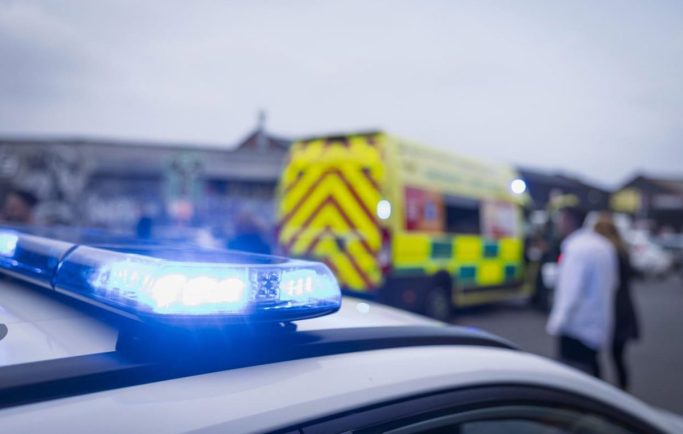
WEST Midlands Police and Crime Commissioner Simon Foster is helping to ensure World Cup football fans – watching big games in Birmingham city centre – are looked after by medical and safeguarding staff.
Simon Foster and the NHS (Integrated Care Board) fund Birmingham Safe Spaces to ensure people enjoying a boozy night out are looked after and have somewhere to turn if they’re in trouble.
Today thousands are expected to crowd bars and clubs on Broad Street and the Arcadian Centre for England’s final World Cup group stage match against Panama. The Safe Spaces support may be in high demand.
Major football tournaments can bring a sharp rise in alcohol-fuelled disorder and violence.
A comprehensive study analysing a decade of West Midlands Police crime statistics revealed that alcohol-related abuse and violence surge by 47 per cent on the day England wins a tournament match.
Safe Spaces directly support those who have too much to drink or are vulnerable following a night out by placing medical professionals and safeguarding experts close to bars and clubs.
It means the team can immediately help vulnerable people and provide professional medical assistance.
They also provide a secure, physical sanctuary for anyone targeted by abuse or harassment. West Midlands Police work closely with the Safe Spaces to provide support as and when required.
First launched in 2019, the service runs every Saturday from 9pm to 5am at the Arcadian and on Broad Street during peak footfall periods.
The service is delivered by dedicated St John Ambulance (SJA) volunteers and is jointly funded by the NHS -Birmingham and Black Country and Solihull’s Integrated Care Board (ICB), which provides emergency ambulance crews and the West Midlands PCC.
High-impact stats: The true value of Safe Spaces
The latest St John Ambulance performance report reveals how the service significantly eases pressures on emergency services and local infrastructure:
The service handled 273 incidents involving 248 unique service users between October 2025 and March 2026 and the presence of Safe Spaces successfully saved 122 potential 999 ambulance call-outs to the West Midlands Ambulance Service (WMAS).
It also prevented 65 potential accident and emergency visits and by managing incidents on-site without emergency call-outs, the operation saves the NHS an estimated £1,694 per operating night in diverted costs.
Following its success, a pilot scheme was successfully rolled out last month in Digbeth to support the area’s booming late-night scene.
West Midlands Police and Crime Commissioner, Simon Foster, said: “Keeping people safe on a night out must always be our top priority and the strain on our emergency services only intensifies during the World Cup.
“Birmingham city centre has a huge number of pubs and clubs that people should rightly enjoy visiting, but with that comes some people who need help to stay safe and make their way home.
“Alcohol-related violence, including violence against women and girls, increases significantly during World Cups and that is why I am part funding the safe space initiative.
“This partnership scheme will keep people safe when they are at their most vulnerable. Safe Spaces ensures victims of spiking, violence, accidents, alcohol or other related harm receive immediate, compassionate on-site care, which directly prevents our emergency services from being completely overwhelmed.”
Ch Insp Amanda Thompson, night-time economy lead for West Midlands Police, added: “Birmingham police are committed to ensuring people feel safe within the borough.
“Tackling violence against women and girls (VAWG) and serious youth violence (SYV) are our top priorities, and by working closely with the partners in these designated safe spaces, we can help detect and prevent crimes and make people feel and be safer.
“The safe spaces act as a sanctuary for people when they need it, and they are a valuable asset to both our officers and members of the public, especially for people feeling vulnerable during nights out in the city.”
Libby Ralph, event healthcare operations manager for St John Ambulance, added: ” “It’s a pleasure to be a part of the Safe Spaces partnership.
“Our volunteers dedicate their time to provide valuable care and welfare to people enjoying the night-time economy of Birmingham – through important welfare touchpoints, providing on-site treatment or transporting more serious incidents to hospital.
“It provides our volunteers with a fast-paced environment to hone their skills and see the value of their clinical practice in real-time. We are delighted to work in partnership on Safe Spaces and help keep people safe on their night out.”
Di Rhoden, director of mursing at NHS Birmingham and Solihull Integrated Care Board (ICB) and NHS Black Country ICB, said:
“Safe Spaces provides practical, immediate support for people who may become unwell, injured or vulnerable while out in Birmingham’s night-time economy.
“By bringing together healthcare, police, St John Ambulance volunteers and local partners, the service helps people get the right support quickly and safely, without always needing to call 999 or attend an emergency department.
“This is exactly the kind of partnership approach that makes a real difference for people and for services – supporting safer nights out, helping protect vulnerable people, and reducing avoidable pressure on ambulance and hospital teams.