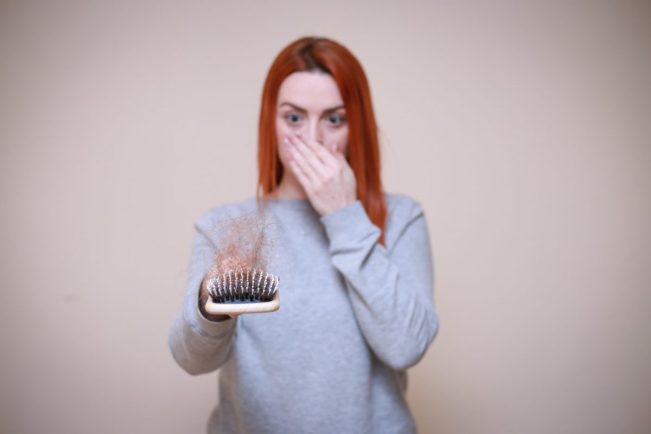
Hair loss is one of those problems that can feel deeply personal, but also strangely confusing. For many people, the first sign is not a bald patch or a dramatic change in the mirror. It is a little more hair on the pillow, more strands in the shower, or the nagging feeling that a ponytail, hairline or parting no longer looks quite the same. In reality, not every episode of hair loss means permanent balding. The NHS says hair loss can have many causes and that much of it may be temporary, while the British Association of Dermatologists notes that telogen effluvium is a common form of increased hair shedding that can be triggered by physical or mental stress on the body.
That matters because many people are mistaking stress-related shedding for something far more permanent.
When hair shedding appears “out of nowhere”
One reason stress-related shedding causes so much anxiety is that it often feels sudden. Someone may go through a difficult period, illness, emotional strain, disrupted sleep, major life upheaval, rapid weight loss, or a particularly intense period at work, and only notice the hair loss later.
The British Association of Dermatologists explains that in telogen effluvium, more hairs than usual move into the shedding phase, and this can follow physical or mental stress.
That delay is significant. Because shedding does not always happen at the exact moment of the trigger, people can struggle to connect the dots.
They may assume they are developing permanent baldness when in fact, the hair cycle has been temporarily disrupted.
NHS Inform describes telogen effluvium as a common cause of temporary hair loss and says it can be triggered by stress, illness, childbirth, nutritional deficiencies and endocrine disorders such as thyroid problems.
The problem with assuming the worst
Hair loss sits in a category of health concerns that people often try to solve before they properly understand. They search for symptoms, compare photos online and jump quickly to high-stakes conclusions.
But the NHS advises people who are worried about hair loss to see a GP and specifically says it is important to get an idea of the cause before thinking about going to a commercial hair clinic.
That advice matters because stress shedding and pattern hair loss are not the same thing.
Pattern hair loss tends to follow a recognisable long-term course. Stress-related shedding, by contrast, is often diffuse, more sudden, and may improve once the underlying trigger has passed. Patient guidance from the British Association of Dermatologists and NHS Inform both support the point that telogen effluvium is typically a temporary shedding disorder rather than a permanent scarring form of hair loss.
Why does this feel especially common right now?
It is not hard to see why this issue resonates with so many people. Modern life places people under pressure in ways that are both obvious and cumulative. Work demands, financial strain, poor sleep, caring responsibilities, health scares and major life changes can all add up. Not everyone under stress will develop visible shedding, but stress-related hair loss is well recognised medically.
The British Association of Dermatologists states that telogen effluvium can be caused by physical or mental stress on the body.
“One of the biggest misunderstandings around hair loss is assuming that every episode of shedding means permanent balding. In many cases, the hair is reacting to stress, illness or disruption, not disappearing for good,” says Dr Roshan Vara, Co-founder and hair transplant surgeon at The Treatment Rooms London.
That is why perspective matters. Hair shedding can be distressing, but distress should not automatically be mistaken for permanence.
Why the right first step is diagnosis, not panic
The most useful response to unexpected shedding is not denial, but it is not panic either. It is an assessment. The NHS says most hair loss does not need treatment and may be temporary or part of getting older, but it also advises seeing a GP if you are worried, especially to help identify the cause. It further notes that hair loss can affect wellbeing, which is why it should not simply be brushed off as cosmetic.
That more measured approach is especially important because hair loss can be linked to a wide range of factors. NHS Inform lists stress, illness, nutritional deficiencies, childbirth and endocrine problems among potential triggers for temporary shedding, while other causes of hair loss may follow entirely different patterns and timelines.
A more helpful public conversation
Too much of the public conversation around hair loss is built around extremes: either “it is nothing” or “it is permanent.” Real life is usually more nuanced than that.
For many people, the more accurate question is not “Am I going bald forever?” but “What has changed recently, and could this be affecting my hair cycle?” That is a calmer, more medically grounded place to begin. The NHS and British Association of Dermatologists both point toward the same basic principle: understand the cause first.
In a world where stress touches so many parts of daily life, it should not be surprising that it can show up in the hair too. The important thing is not to assume that shedding automatically means permanent loss. Sometimes, the most reassuring answer is also the most accurate one: the hair may be responding to strain, and with the right assessment and time, recovery may be possible.
Article by Lisa Thomas.