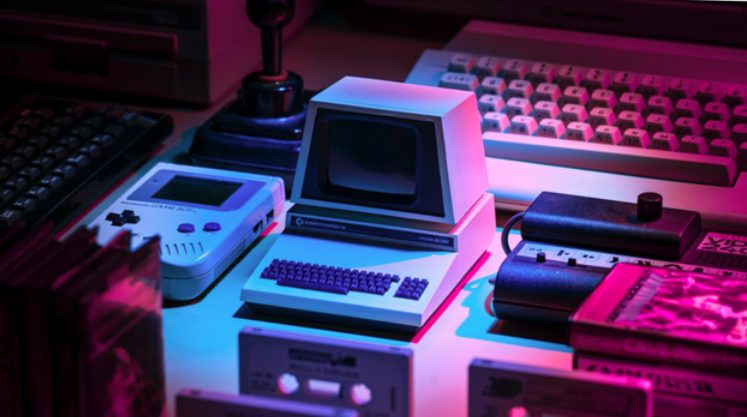
Not that long ago, retro gaming seemed mostly about nostalgia, something for folks who remembered the early days. Suddenly (well, maybe not suddenly, but quickly all the same), it’s shifted into something bigger—a kind of movement, maybe. These days, digital platforms have turned classic titles into something anyone can access, no original hardware required.
There’s a kind of irony here: people are now digging into those older games, borrowing ideas, and coming up with their own riffs on familiar mechanics. The latest from Quantumrun suggests those mini versions of classic consoles don’t tend to last on shelves—hard to say if it’s hype, sentimental value, or just good marketing, but sell out they do.
Collectors circle the resale market, pushing prices for cartridges and handhelds somewhere well above what anyone saw a decade ago. You’ve got esports folks, modders, whole online communities feeding back into the ecosystem with events, tourneys, and those obsessive forums that seem to pop up overnight. It’s not just about clinging to the past: tech allows preservation, sure, but also reinvention—and, honestly, who knows where it’s heading by 2025.
Digital access and the modern retro experience
So, vintage hardware? Maybe not strictly necessary anymore. With digital services offering up huge libraries of classics both from arcades and consoles, a whole new crowd is stumbling onto games their parents (or, let’s face it, even grandparents) might remember. The subscription thing—marketplaces, storefronts, all those—means historical titles are just a couple button presses away. There’s this SNK MVSX 2025 update that throws around big numbers: Switch Online and PlayStation Classics are apparently seeing serious surges, something like forty percent more downloads compared with last year, partly thanks to new additions like online slots and other retro-inspired features.
Meanwhile, plug-and-play setups—wireless controllers, HDMI, the works—are quietly swapping out old cables, making it all feel at home in a modern living room. Now, communities form around beating high scores or teaming up in ways that probably weren’t possible in the original era. Home arcades, fueled by easy access to digital content, have added competitive options like online arcade games and classic prize redemption games to recapture the amusement hall feeling.
Quality re-releases and sophisticated emulation
Getting into the remasters and emulators: things here have become tricky to tell apart. There are these “pixel perfect” re-releases, and then some emulators can make you wonder if you’re playing on the real deal. Publishers pour resources into redesigning old games for current displays; you might see titles showing up in 1080p or, occasionally, even 4K, but they somehow keep the blocky magic. Audio—can’t forget the audio—now gets cleaned up, while efforts to simulate those old CRT scanlines? It appeals to a very particular sense of memory, or maybe it’s just style.
If that Newegg Community Gaming report is accurate, certain mini-consoles (SNES Classic, Sega Genesis Mini) have been flying past their expected sales—sometimes by well over a hundred percent in some places. These little machines end up as collectibles, and it’s not just the original generation buying them either; a crowd jumps in, despite being born after those consoles were ever mainstream. There’s also this “rewind” thing, or “save states,” which lowers the barrier for people who never grew up with the brutal original difficulty. Limited-run physical editions? Apparently, they sometimes disappear in minutes (although it’s hard to verify that across the board), and collector prices edge higher each year.
Rise of handhelds and the impact on the indie scene
Even as everyone talks about consoles, portable retro gaming is—well, maybe thriving is the word? GameBoy Advance SP, Nintendo DS—machines that seemed outmoded a while ago—now fetch prices the manufacturers probably never imagined. Sumo Shop Store makes it sound pretty dramatic: something like a fifty-five percent spike since just 2023, for the real hardware. Some of that is pure nostalgia, sure, but there’s a fair share of newcomers who just want to see what authentic play felt like. Indie creators, instead of chasing cutting-edge graphics, look back—lifting ideas from older tech and purposefully embracing those quirks.
You get pixel art, chiptune soundtracks, tight controls—basically, the classics reimagined. Projects like Sea of Stars or Pizza Tower seem to nudge the market toward these roots, suggesting there’s more here than mere tribute; it actually connects with audiences. Contemporary online arcade games and mini-games also integrate retro art styles, keeping the aesthetic alive in a rapidly advancing industry. This push and pull between the old world and whatever’s next gives the whole thing a personality it might not have had even a few years back.
Events, communities, and the future of immersion
These days, retro gaming is less hidden, and instead, it’s become almost impossible to miss. Gatherings—think Games Done Quick or Retro World Expo—bring together a wild mix of speedrunners, hardware hackers, die-hard collectors, even just folks who want to watch.
According to that 2025 Haptic report, livestreamed speedruns now attract hundreds of thousands of sets of eyes—not bad for games that shipped decades ago. Online forums don’t just swap stories; they’re spots for trading technical knowledge, tips on restoration, niche troubleshooting. On the preservation front, credit is due: emulation groups that started informally are now recognized as actually safeguarding digital culture.
SNK MVSX points out that this may shore up access, especially for classics stuck in legal or hardware limbo. Where does it all go from here? Arguments swirl around VR and AR, and some people are pretty optimistic these will pull retro titles into new forms—maybe even let you walk inside a 2D world, sort of. Early experiments with wearables seem to suggest houses, or maybe whole families, where the old and the new overlap—it’s not totally clear what that will look like yet.
So, retro gaming isn’t just some sentimental detour. At this point, it feels much closer to an evolving tech movement—it shapes (some would say reshapes) how we approach play, design, and memory itself. As of 2025, anyway, you might see these games standing somewhere between history and invention; both creative fuel and commercial juggernaut, depending who you ask.