The safety of the West Midlands is an important concern for residents, businesses, and visitors alike. The region’s towns and cities each present their own security challenges, influenced by population density, nightlife, transport links, retail activity, and local environments. Understanding these differences helps people make more practical safety decisions for daily life, work, and events.
Safety across the West Midlands depends on a range of factors, from community engagement to local infrastructure and service provision. Security services in the West Midlands play a significant role in managing public safety concerns and supporting peace of mind for those living, working, and socialising in the area. The latest available public data shows that the picture is mixed rather than simple. Some crime types have fallen across the wider force area, while busy urban centres still require careful planning and visible prevention measures.
Key safety factors in West Midlands towns and cities
Towns and cities such as Birmingham, Coventry, Wolverhampton, Dudley, Solihull, Walsall, and Sandwell each have different public safety profiles. These are shaped by local demographics, business districts, housing density, night-time economies, and major transport routes. According to Police.uk data for the year ending December 2025, the West Midlands force area recorded an average all-crime rate of 102.62 crimes per 1,000 residents. Birmingham was above that force average at 118.30, while Coventry, Dudley, Solihull, Walsall, and Wolverhampton were below it.
This means the West Midlands should not be treated as uniformly safe or unsafe. City centres, shopping areas, transport hubs, and nightlife districts naturally face higher footfall and more complex risks. In Birmingham city centre, for example, the most commonly reported crimes in April 2026 were violence and sexual offences, shoplifting, public order offences, and other theft. These patterns show why local safety planning needs to reflect the specific use of each area rather than relying only on regional averages.
What the latest crime data shows
Recent figures suggest that several serious crime categories have been moving in the right direction. West Midlands Police reported that, for the year ending March 2026, knife crime had fallen by 15%, home burglaries by 8%, personal robbery by more than 20%, vehicle crime by almost 4%, and gun crime by 19%.
This aligns with wider national trends in some high-harm offences. ONS data for England and Wales for the year ending December 2025 showed that police-recorded knife-enabled crime fell by 10% compared with the previous year. The West Midlands Police area still accounted for 8% of knife-enabled offences in England and Wales, but the force recorded a 15% decrease, to 3,946 offences.
For residents, visitors, and businesses, the key point is that improving figures do not remove the need for prevention. A lower regional trend can sit alongside persistent local hotspots. Areas with high footfall, late opening hours, large venues, or busy public transport routes still need proportionate safety measures, especially during weekends, events, and peak travel times.
The role of security services and visible deterrents
Trained security guards, event security teams, and mobile security patrols are important in reinforcing public safety. Their presence acts as both a deterrent and a source of immediate assistance for incidents ranging from lost property and disorder to emergencies at crowded gatherings. In cities such as Birmingham, visible patrols and static team deployment remain especially relevant for shopping centres, transport hubs, offices, construction sites, business parks, and nightlife districts.
Effective event security draws on lessons from across the UK but should be adapted to local conditions in the West Midlands. Planners need to consider venue size, expected attendance, alcohol availability, crowd movement, access points, transport links, and the surrounding neighbourhood. Risk assessments, clear communication channels, and suitable staffing levels help organisers respond more quickly if an incident develops.
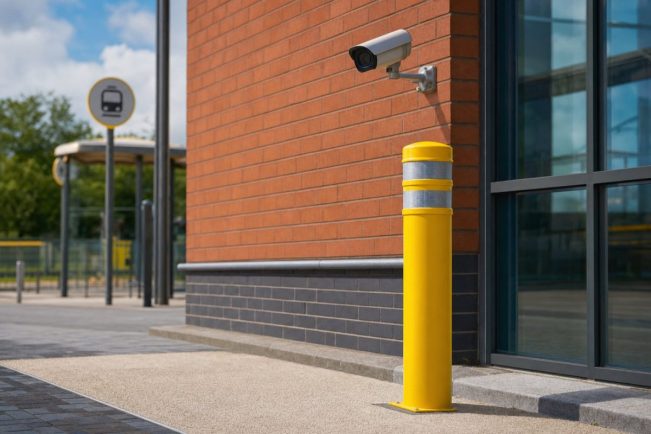
Visible deterrents are particularly useful where opportunistic crime is a concern. Retail areas, car parks, vacant properties, warehouses, and late-night venues can benefit from a combination of access control, CCTV monitoring, security guards, and regular patrols. These measures do not replace police activity, but they can support prevention, reassurance, and faster reporting.
Community collaboration and ongoing safety improvements
The effectiveness of safety measures in the West Midlands often depends on collaboration between businesses, public authorities, residents, and local policing teams. Regular communication, incident reporting protocols, and visible security solutions can help people feel more confident when using town centres, attending events, or travelling through busy areas.
Mobile security patrols have become increasingly useful because they offer flexible coverage across multiple sites. The use of mobile security patrols can support business parks, residential developments, vacant premises, retail locations, and venues that do not require a permanent guard on site. Patrols can also help identify issues early, such as damaged access points, suspicious behaviour, poor lighting, or signs of attempted theft.
Public safety is also affected by environmental design. Clear signage, good lighting, maintained public spaces, secure entry points, and well-managed pedestrian routes all contribute to reducing risk. In areas where antisocial behaviour, theft, or disorder is a recurring concern, practical improvements to the physical environment can work alongside policing and private security.
Proactive safety planning for local businesses and events
For businesses and event organisers, proactive planning remains essential to building safer environments in the West Midlands. Security guards at entrances and exits, clear emergency procedures, staff training, visitor management, and reliable incident reporting all contribute to reducing risk and improving public confidence.
Businesses should also review their plans regularly rather than treating security as a one-off decision. Crime patterns can change with the season, local development, transport changes, nightlife activity, and major events. A plan that works for a quiet weekday may not be suitable for a match day, festival, product launch, or late-night trading period.
Collaborating with trusted providers like ProFM Group enables organisers and businesses to benefit from tailored event security and mobile security patrols designed around the region’s varied needs. By prioritising visible deterrents, maintaining close links with local stakeholders, and adjusting strategies as town and city dynamics evolve, those responsible for people’s safety can help keep the West Midlands welcoming, practical, and secure.