How to Identify Legitimate Online Casinos in Europe
Choosing an online casino in Europe may appear simple at first glance, yet legitimacy is rarely determined by appearance or popularity alone. While Europe is generally associated with higher regulatory standards, it does not operate under a single gambling authority. Each country applies its own licensing rules, technical requirements, and consumer protection measures, which directly influence the player experience.
For players, this means that trust must be built through verification rather than assumptions. A casino that operates legally in one European country may face restrictions in another, and promotional claims often fail to reflect local regulatory realities.
Licensing and Regulatory Transparency
Licensing is the foundation of legitimacy in the European online casino market. A valid licence defines how player funds are protected, how disputes are handled, and how responsible gambling measures are enforced. Regulators have the authority to fine operators, suspend licences, or remove market access when compliance standards are not met.
Recognised European Gambling Licences
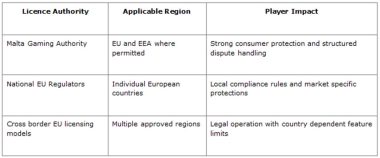
European players typically encounter either cross-border licences used across multiple markets or national licences designed for specific countries. Legitimate casinos clearly disclose the licensing authority, licence number, and legal operator name, allowing players to verify these details independently.
Licence Verification and Operator Accountability
Transparency is a defining trait of legitimate casinos. European regulators maintain public registers that allow players to confirm whether a licence is active and whether the operator is authorised to accept players from a specific country.
- Licence numbers can be confirmed through official regulatory databases
- Operator names and addresses match public records
- Licence status is active and unrestricted
- Market access is approved for the player’s country
Country Specific Gambling Regulation in Europe
European gambling regulation is not uniform. National frameworks can impose limits on deposits, bonuses, advertising, and gameplay mechanics.
Gambling Regulation in Germany
Germany operates one of the most restrictive gambling frameworks in Europe. The regulatory focus is placed on harm prevention and player control rather than promotional flexibility.
- Mandatory player registration and monitoring systems
- Monthly deposit limits applied across operators
- Restrictions on certain slot features and gameplay settings
- Tight controls on bonuses and advertising language
Gambling Regulation in Austria
Austria follows a monopoly based regulatory model in which online casino licensing is largely restricted to state linked entities. This limits the number of domestically licensed platforms available to players.
- Limited selection of locally licensed online casinos
- Strong consumer law protections outside gambling specific regulation
- Common use of EU licensed operators under broader legal interpretations
Other Regulated European Markets
Countries such as the Netherlands, Spain, and several Nordic states operate national licensing systems with varying degrees of restriction. These frameworks often prioritise consumer protection but limit promotional intensity.
- Local identity verification requirements
- Restrictions on bonus size and advertising
- Mandatory responsible gambling tools
- Market specific compliance obligations
Players should evaluate casinos based on what they are legally permitted to offer within each jurisdiction.
Player Data Protection and Game Fairness
Legitimate European casinos are required to protect player data and ensure fair gameplay. These obligations affect how personal information is stored, how payments are processed, and whether games operate under independently verified conditions.
Casinos that fail to explain security or fairness measures clearly often present elevated risk. Transparency in these areas is a strong indicator of regulatory compliance.
Data Security and GDPR Compliance
Under GDPR, European casinos must follow strict standards governing personal and financial data. These rules create accountability and give players clearer rights regarding how their information is handled.
- Encryption across login and payment pages
- Clear explanations of data storage and usage
- Disclosure of third party service providers
Using Independent Reviews for Verification
Comparing multiple casinos manually can be time consuming, especially when assessing licensing, payments, and bonus restrictions across countries. Independent review platforms help structure this process using consistent evaluation criteria.
These resources focus on factual checks rather than promotional language and allow players to confirm whether key legitimacy indicators are present.
- Licence validity and operator identity
- Payment consistency and withdrawal rules
- Bonus transparency and restrictions
- Responsible gambling tools and visibility
Instead of analysing each factor individually, many players rely on structured resources such as a best Europe online casino list, where licensing, payments, and player protection standards are reviewed side by side using consistent methodology.
Payment Reliability and Withdrawals
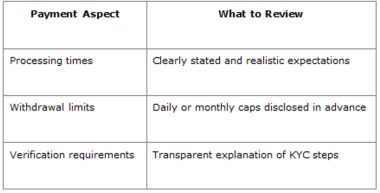
Payment behaviour often reveals more about a casino’s legitimacy than marketing claims. Reliable operators explain how deposits and withdrawals work, publish realistic processing times, and apply verification rules consistently.
Players should approach payment sections as a credibility check rather than a technical detail.
Supported Payment Methods in Europe
Legitimate casinos support payment options aligned with European banking standards and clearly explain any country specific limitations.
- SEPA bank transfers
- Local instant banking solutions
- Established e wallet services
- Debit and credit cards permitted under local rules
Withdrawal Processing and Transparency
Clear withdrawal rules reduce misunderstandings and build trust. Reliable casinos explain whether processing times refer to internal approval or full payout delivery and disclose limits before deposits are made.
Bonus Terms and Promotional Transparency
Bonuses attract attention but often create confusion. Legitimate European casinos are expected to explain promotional conditions clearly so players understand the true value of an offer before participating.
Transparent bonus terms reduce the risk of blocked withdrawals or unrealistic wagering expectations and help players make informed decisions.
Bonus Availability by Country
Bonus eligibility in Europe often depends on national regulation rather than casino preference. Restrictions may apply based on player location, licensing rules, or payment methods.
Legitimate casinos disclose these limitations clearly before registration, helping players avoid confusion and unmet expectations.
Responsible Gambling and Player Protection
Responsible gambling is a regulatory requirement for licensed European casinos. Operators are expected to provide tools that help players manage activity responsibly and recognise potential risk.
Casinos that integrate these measures into the user experience demonstrate long term accountability rather than short term engagement goals.
Article written by Evelina Brown