British Steel isn’t just any old company. It makes the steel for our railways. For our homes. For our defences. And yet, the company’s Chinese owner, Jingye, was not playing straight with Britain.
It was clearly about to shut down British furnaces to spare China’s furnaces the competition. That might have been good for China. But it was bad for Britain.
Investment into Britain from authoritarian states and offshore havens has soared fivefold in the last decade, to nearly a quarter of a trillion pounds.
Earlier this year, regulators waved through the proposed merger of Vodafone and Three, despite the clear links between Three’s owners and China’s state council. Last year, buyers from the UAE – not a place known for its high regard for free speech – were almost allowed to takeover The Daily Telegraph.
We’re giving the green light for China to invest in our offshore windfarms.
Just look at Companies House. It’s the frontline in the fight against economic crime.
It’s supposed to check exactly who is setting up companies doing business in Britain. But investigators found anyone can file anything and pretend to be a bank. Up to a million company registrations may be fraudulent.
Witnesses told the Business and Trade Committee that it is registering partnerships that are running sanctions-busting operations to supply Putin’s evil war machine.
For too long, we’ve acted like economic security was someone else’s job. Hostile states are trying to buy up our tech firms, our telecoms, even our newspapers—while we’re patting ourselves on the back for being “open for business.”
But openness without security is not strength.
The US understands this. Japan lives it. In Tokyo, economic security is a whole-of-society effort – government, business, universities and communities pulling in the same direction. In Washington, they don’t just talk about risk – they map it, model it, and move against it with purpose.
Here in Britain? We don’t even have a proper public definition or economic security or a threat assessment we all work from. Our National Security Council is supposed to coordinate economic security – but the Secretary of State for Business has been taken off it. The government resolutely refuses to share any information about key transactions with Parliament unlike America’s powerful Committee on Foreign Investment in the United States.
That’s why the Business and Trade Committee is calling for change: we need a national economic security strategy – one that spells out the threats, sets clear priorities, and puts real power behind the words. That means a proper threat assessment, like the Americans publish every year. It means better coordination between business and government, like the Japanese. It means support for firms to build strategic stockpiles of things we need and onshore capabilities to make things it’s risky to import.
We need a new Office of Economic Statecraft, like the forerunner to the Ministry of Economic Warfare we created ahead of the Second World War – with the power, brains, the backing to bring order.
Bringing order to economic security, now – vital in these times of uncertain international relationships.
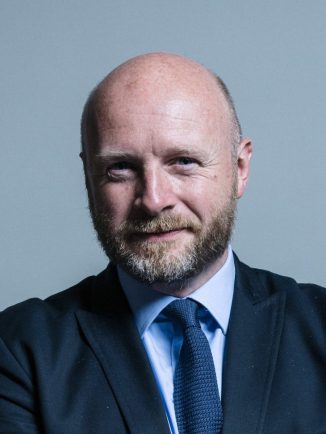
<b>Liam Byrne, Birmingham Hodge Hill and Solihull North MP</b>