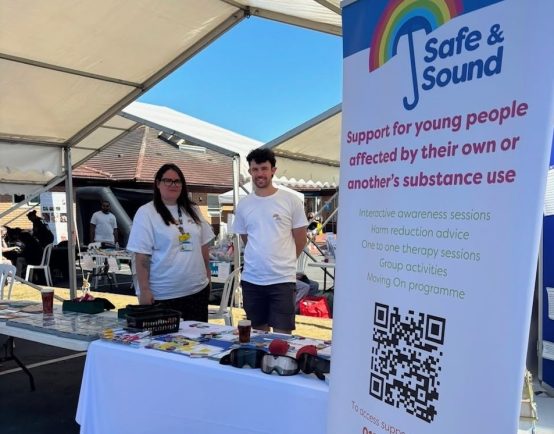
As Alcohol Awareness Week drew to a close on Sunday, the Solihull Integrated Addiction Services (SIAS) team spent the weekend out in the community, raising awareness of the role alcohol plays in people’s lives and promoting healthier lifestyles.
Kim Parsonage and Joe Mills represented SIAS at Feel the Rhythm, Beat the Stigma, an event held in Marston Green on Saturday.
They were there on behalf of three linked services: SIAS, SIASYP (the young people’s arm of the service) and Safe and Sound. Between them, the services offer free and confidential support to adults and young people struggling with substance use, as well as support for children aged five to 18 who are affected by a family member’s drug or alcohol problems.
The event forms part of a wider push by SIAS to get people talking about substance dependency, not just alcohol, but prescription medication too, an issue the service says is often overlooked because it can develop quietly, even among people who otherwise appear to have their lives firmly under control.
In a recent post on its website, SIAS pointed to the case of golfer Tiger Woods as an illustration of how this can happen. After a series of injuries and surgeries, Woods was prescribed pain medication; over time, the service says, this developed into a dependency that contributed to his arrest in 2017, when he was found impaired not by alcohol but by prescription drugs. SIAS describes this progression from injury, to legitimate prescription, to increased reliance, to dependency, as a pattern professionals often refer to as the “opioid pathway.”
The service says prescription medicines can carry a false sense of safety because they are legally obtained and socially accepted, and that pressures such as poor mental health, the aftermath of the Covid-19 pandemic, and an ageing population taking multiple medications can all increase the risk of dependency developing.
According to figures cited by SIAS, an estimated 290,635 adults were in contact with drug and alcohol services in England between 2022 and 2023, with 48% of those in treatment being supported for opiate use and 30% for alcohol. The service also cites wider data suggesting millions of people in the UK show signs of dependency on commonly prescribed medicines, including antidepressants, opioid painkillers, gabapentinoids, benzodiazepines and so-called “Z-drugs,” with women, older adults and people in areas of socio-economic deprivation said to be particularly affected.
SIAS says warning signs of prescription drug dependency can include taking medication more often than prescribed, feeling anxious when supplies run low, seeking prescriptions from multiple doctors, or using medication to manage emotions rather than physical symptoms. Later signs can include withdrawal symptoms, mood changes, and difficulties at work or in relationships.
The organisation is keen to stress that its message is not one of judgement. Its approach, it says, centres on understanding, recognising the signs early, and knowing where to turn for confidential support — whether someone is concerned about their own drinking or drug use, worried about a friend or family member, or simply unsure and looking for advice.
Anyone who has been reflecting on how alcohol or prescription medication is affecting their life, or that of someone close to them, is encouraged to get in touch with SIAS.
Support can be reached by calling 0121 301 4141, emailing [email protected], or visiting www.sias-solihull.org.uk.