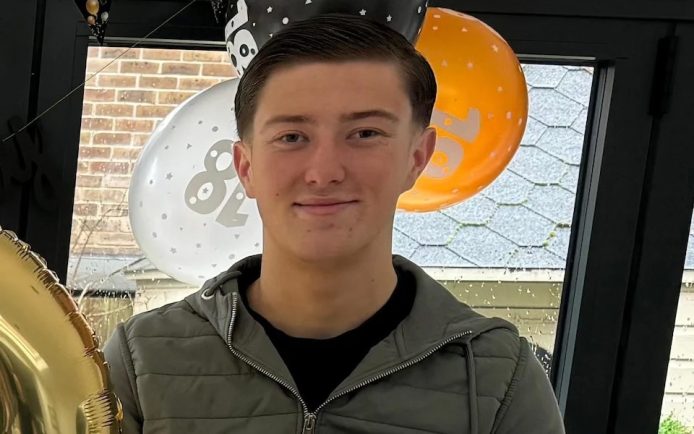
The family of murdered university student Henry Nowak have called for answers after the release of distressing police bodycam footage showing the teenager repeatedly telling officers, “I can’t breathe”, in the moments before his death.
The footage was made public following the conviction and sentencing of Vickrum Digwa, 23, who was ordered to serve a minimum of 21 years in prison for the murder of the 18-year-old Southampton student.
Henry, originally from Essex, was stabbed four times during an altercation in Southampton in December last year. Despite suffering fatal injuries, bodycam footage shows him telling responding police officers that he had been stabbed and repeatedly pleading for help.
In the video, Henry can be heard saying “I’ve been stabbed” and “I can’t breathe” several times while lying on a gravel driveway. However, officers initially treated him as a suspect after Digwa falsely claimed he had been the victim of a racist assault.
The teenager was handcuffed while critically injured. Only later did officers realise the seriousness of his condition and request urgent medical assistance.
The footage has prompted widespread public concern and renewed scrutiny of the actions of Hampshire and Isle of Wight Constabulary on the night Henry died.
Speaking after the sentencing, Henry’s father, Mark Nowak, described the images as heartbreaking and said his son should have been treated as a victim rather than a suspect.
He said he was haunted by thoughts of Henry’s final moments and the fact that his son repeatedly told officers he had been stabbed but was not initially believed.
“Henry did not die with dignity,” he said.
“He should be laughing and joking with his friends, living the life he worked so hard to build.”
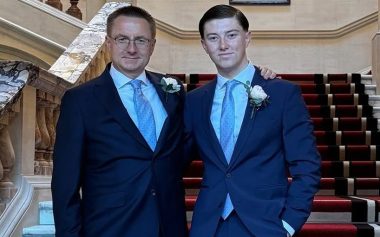 Mark Nowak with his son Henry, who was killed by Vickrum Digwa. Image: Family handout.
The emotional impact of Henry’s death was laid bare during sentencing proceedings at Southampton Crown Court.
His sister, Olivia, described him as her best friend and said a part of her died when he died.
“The day we got the knock on the door to say my brother had passed, I don’t think there are any words to describe that type of pain,” she told the court.
Henry’s mother, Lucy Ross, described him as ambitious, determined and full of life, adding that there would always be a hole in the family’s hearts that could never be repaired.
The court heard that Digwa had falsely claimed Henry had racially abused him before the attack.
However, sentencing judge William Mousley KC rejected those allegations.
The judge said he was satisfied that Henry had not said anything racist and that such behaviour was completely at odds with his character.
Addressing Digwa directly, the judge said he had brought shame upon his family, community and religion through his actions.
He also noted that the murder had stirred racial tensions and caused concern among members of the Sikh community who had done nothing wrong.
Community leaders were quick to condemn the killing.
A spokesman for Southampton Gurdwara said Digwa’s actions were entirely contrary to Sikh teachings and values, while also praising the dignity and strength shown by Henry’s family throughout the case.
The case has also reignited debate about the carrying of kirpans, ceremonial blades worn by practising Sikhs as an article of faith.
While Sikh organisations have stressed that the overwhelming majority of Sikhs carry kirpans responsibly and peacefully, questions have been raised about whether current legislation governing bladed articles carried for religious purposes should be reviewed.
Hampshire and Isle of Wight Police and Crime Commissioner Donna Jones has called for an urgent review of the rules surrounding religious and ceremonial blades, particularly where larger knives are concerned.
Supporters of the existing exemption argue that the kirpan is a deeply significant religious symbol protected under British law and carried responsibly by generations of Sikhs. Others believe Henry’s death has highlighted the need to examine whether additional safeguards are required to balance religious freedoms with public safety.
Meanwhile, the actions of police officers at the scene remain under investigation by the Independent Office for Police Conduct (IOPC).
Following Digwa’s conviction, Hampshire and Isle of Wight Constabulary apologised for Henry being arrested and handcuffed while fatally injured.
The force said it would fully cooperate with the ongoing investigation.
Henry’s family have welcomed the murder conviction but say their fight for answers is not over.
In a statement, they called on the Government to ensure the police watchdog has the resources and independence necessary to carry out a full and transparent investigation.
“Our family should not have to fight for the truth anymore,” they said.
Prime Minister Sir Keir Starmer also commented on the case, describing it as an awful tragedy and saying it was right that the police response was being investigated.
For Henry’s loved ones, however, no sentence can undo the devastation caused by his death.
The teenager who had become the first grandchild in his family to attend university, and whose future appeared full of promise, will never return home.
As the investigation into the police response continues, his family say they remain focused on one thing above all else, ensuring that Henry’s final moments, and the lessons arising from them, are never forgotten.