MEASLES are on the rise in the West Midlands.
The UK Health Security Agency (UKHSA) has revealed there have been seven confirmed cases (mostly across Birmingham) in just over a week.
In April 109 cases were confirmed in England and 86 have been recorded to date in May, according to the data.
The UKHSA say cases have predominantly been in unvaccinated children aged 10 years and under, with on-going outbreaks in a number of regions.
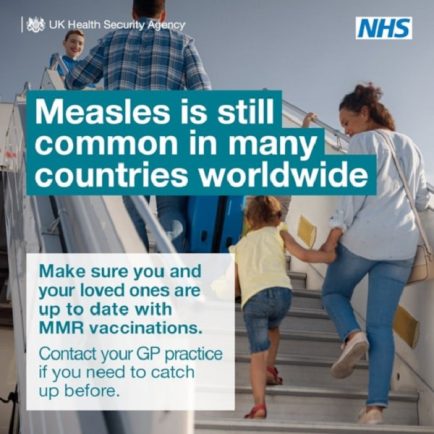
There has also been a global increase in measles cases including Europe over the last year and the Agency is concerned, that with travelling for holidays or to visit family this summer, there is a risk this could lead to another surge of measles cases in England.
UKHSA regional deputy director, West Midlands, Katie Spence said: “Measles can cause serious illness, and while most people will recover completely within a couple of weeks, the virus can sometimes leave permanent disability and can even be fatal.
“Measles is very infectious and can spread rapidly among communities, if people have not had at least one dose of the MMR vaccine.
“The recent wave of cases we’ve seen in the West Midlands have all been in unvaccinated children under 10 years old.
“That’s why it’s so important that you and your family are protected by the MMR vaccine – especially before meeting up with family and friends for get togethers or going away on holiday, as outbreaks are being seen in many countries.
“The MMR vaccine is very effective, and protects against measles, along with mumps and rubella. It is completely free on the NHS, and there is a version of the vaccine (Priorix) that is suitable for people who don’t touch pork products – just ask at your GP surgery.
“You need two doses for maximum protection, and these should be given before your child starts school full-time, but you can arrange to have any jabs you’ve missed, it’s never too late to catch up.”
The UKHSA say in England, the decline of the uptake of childhood vaccinations including MMR in the past decade, well below the World Health Organization (WHO) 95 per cent target, means that many thousands of children are left unprotected with the risk of outbreaks linked to nurseries and schools.
The UKHSA is concerned that more outbreaks may occur again on a larger scale this summer as families with unvaccinated children and adults travel to countries where there are outbreaks.
It added that it is important that anyone travelling for summer holidays or to visit family, especially parents of young children, check that all members of their family have received both their MMR vaccines.
Dr Vanessa Saliba, consultant epidemiologist at the UK Health Security Agency: “It’s essential that everyone, particularly parents of young children, check all family members are up to date with two MMR doses, especially if you are travelling this summer for holidays or visiting family. Measles cases are picking up again in England and outbreaks are happening in Europe and many countries with close links to the UK.
“Measles spreads very easily and can be a nasty disease, leading to complications like ear and chest infections and inflammation of the brain with some children tragically ending up in hospital and suffering life-long consequences. Nobody wants this for their child and it’s not something you want to experience when away on holiday.”
The first MMR vaccine is offered to infants when they turn 1 and the second dose to pre-school children when they are around three years and four months old.
Around 99 per cent of those who have trwo doses will be protected against measles and rubella. Although mumps protection is slightly lower, cases in vaccinated people are much less severe.
Anyone, whatever age, who has not had two doses can contact their GP surgery to book an appointment. It is never too late to catch-up.