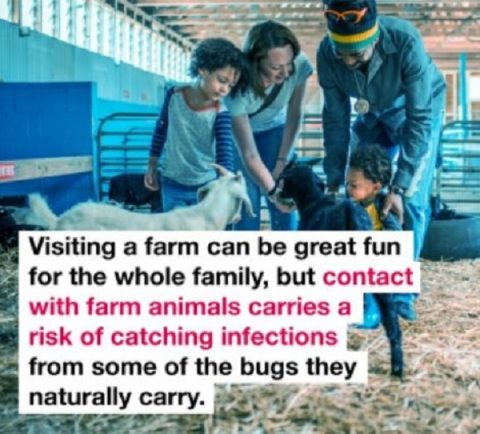
FAMILIES and school groups are being reminded to keep up good hand hygiene to avoid stomach bugs during visits to farms and other animal attractions.
Thousands of visits take place every year across the West Midlands, providing members of the public with memorable and educational experiences.
However, visiting these venues is not without risk, and the UK Health Security Agency (UKHSA) is warning people that a fun day out can lead to a nasty stomach bug if correct hygiene, including effective handwashing, isn’t practiced.
The UKHSA West Midlands Health Protection Team met with public health partners in the region, to discuss ways of reducing the number of animal-related outbreaks of infections such as E. coli O157 and Cryptosporidium.
Each spring there is a sharp rise in cases of these stomach bugs, linked to people handling and feeding animals at petting farms.
These bugs are carried in the gut of many animals (zoonotic infections) and can lead to unpleasant and even serious illness in young children and pregnant women. Last year, UKHSA investigated 16 outbreaks of Cryptosporidium in England, many of which were linked to lambing events.
Paul Fisher, UKHSA West Midlands health protection consultant leading on environmental hazards, said: “Thousands of people in the West Midlands region visit animal attractions each year and have a great time, but there is the risk of catching an infection from the animals or the wider environment, which can result in serious stomach upsets.
“Outbreaks can be large and complex, with many people affected in some cases.
“That’s why it’s so important that venues have the proper infection prevention measures in place, including proper handwashing facilities, and that visitors including young children use them after touching animals and before eating and drinking. Hand gels or wipes are not a substitute for washing hands in soap and warm water.
“Even if you’ve not been touching the animals themselves, you may have been touching fences or other surfaces in areas with animals, or sitting on and touching grass that is contaminated in country parks or farmland.
“So, wash hands thoroughly, and when you get home, make sure that shoes and buggy wheels have also been washed in soapy water. That way your day out will only leave you with happy memories.”
If you or anyone in your group is sick or has diarrhoea within two weeks of visiting a farm, please contact your GP or NHS111 as soon as possible.
General advice for visitors to farms and animal attractions
- even if animals look clean and healthy, they can carry a number of infections that may be harmful to people, especially children and pregnant women
- cases of gastro-intestinal infections associated with animals generally increase during spring and lambing season, and also summer when people are on holiday
Things you should do when visiting an attraction with animals
- read and listen to the advice provided by the visitor attraction
- wash hands thoroughly with soap and water after touching animals, fences or other surfaces in animal areas and before eating or drinking
- remove and clean boots or shoes that have become soiled, clean pushchair wheels
- supervise children closely to ensure they wash hands properly
- eat and drink in picnic areas or cafés only
Things you should not do when visiting an attraction with animals
- do not put hands on faces or fingers in mouths while petting animals or walking around the farm or animal attraction
- do not allow children to put their faces close to farm animals or kiss the animals
- do not eat or drink while touching animals or walking around the farm or zoo – this includes not eating sweets, crisps or chewing gum
- do not use gels or wipes instead of washing hands with soap and water – gels and wipes do not remove the germs found on farms