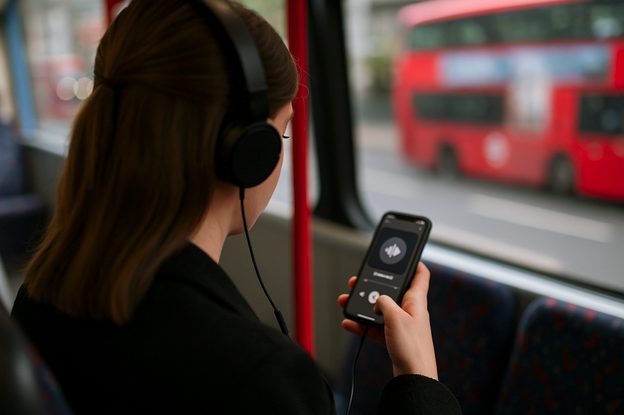
Travel used to mean empty stretches of time. A bus ride or a train trip used to be a pause between destinations, often filled with little more than glances out the window. That has changed. Phones now frame the journey as time to be used, not endured. Thanks to apps, travel hours have become versatile and full of choice: news apps deliver updates, music apps fill the quiet, and mobile casino apps add the promise of quick games, welcome bonuses, and secure payments that make travel feel less like waiting and more like doing. The modern commute is therefore defined less by the rails or roads beneath and more by the screen in hand, and the following sections reveal how this daily habit has taken hold.
The Commuter’s New Companion
Contrasting to the old well-established belief that commuting is inherently monotonous, today’s numbers reveal a significant change in how this time is perceived. Research shows that most commuters in the UK – about 70% – use smartphones during their journeys, while close to 30% prefer to stay device-free. That split stands out: seven in ten treat travel time as digital time, while three in ten still preserve silence or offline thought.
This distinction matters because it shows that commuting is no longer a uniform experience. For the majority, the phone is an extension of their pocket, making the train or bus another place to stay connected or entertained. For the minority, the absence of a screen is a deliberate choice, turning the journey into a pause from constant digital attention. Together, these habits highlight how varied the modern commute has become.
Phones Outrun Old Screens
The dominance of mobiles over older forms of media is now unmistakable. Worldwide data in 2025 shows that time spent using smartphones averages 4 hours and 37 minutes per day, overtaking the 3 hours and 16 minutes people devote to television, which is a clear sign that mobiles have become the primary screen for daily entertainment, including during commutes. That transition is cultural as much as technological, signalling how leisure and connection are increasingly filtered through apps rather than living-room screens.
For travel, this matters because mobiles carry the advantage of portability. Unlike television, which is locked to a place, the phone is always within reach. A train ride or a bus seat now doubles as a theatre, a reading room, or a gaming console, depending on what the traveller wants. The result is that commutes have been folded into daily screen time, not set apart from it.
Filling the Minutes, Day After Day
The most telling feature of modern phone use is its frequency. Studies show that people check their devices dozens of times daily, on average every twelve minutes. That pace means even the shortest trip across town is broken up by several interactions with a phone, each carrying whatever the person wants to reach for in the whole wide internet.
A glance at headlines, a quick reply to a message, or a short game transforms what could have been an unbroken stretch of waiting into a sequence of small activities. On longer commutes, this effect multiplies, keeping attention occupied without requiring deep focus.
These moments may appear trivial in isolation, but together they explain why travel time feels shorter today. By slicing the journey into bursts of activity, phones create the sense that every few minutes hold something new, softening the weight of distance and delay.
From Podcasts to Games – What People Choose on the Move
If frequency explains how phones fill commutes, content explains why travellers return to them so often. Music and podcasts remain common companions because they insulate travellers from the noise of trains and buses while providing either comfort or stimulation depending on the selection. News apps serve a different purpose, offering a quick sense of control and awareness before the day fully begins. Video streaming services invite immersion, yet their shorter clips meet the opposite need – an easy distraction that requires little effort.
These choices show how commuters are not just passing time but matching apps to the demands of the moment. E-reading apps appeal to those who want continuity, letting a novel or article carry across several journeys without being rushed. Games, by contrast, attract people looking for instant bursts of achievement, from clearing a puzzle in minutes to progressing through a larger storyline over the week. Each category is chosen not simply for what it offers but for how it can manage mood – calming, informing, distracting, or rewarding.
This variety makes the commute less about waiting and more about steering the experience. Apps let travellers decide what the journey becomes, which prepares the ground for how commuting is now viewed as personal time in its own right.
When Travel Becomes Personal Time
What ties these habits together is the way phones have blurred the line between commuting and personal life. The train carriage or bus seat is no longer a neutral zone between home and destination; it has become a personal space where individual goals can be pursued. Relaxation, distraction, or catching up on tasks are now as much part of the journey as reaching the end stop.
This development reframes the commute. It is not merely a stretch to be tolerated but a piece of the day people can claim. That sense of choice is what defines travel in the phone era: each person decides whether the time is filled with information, entertainment, or quiet escape, making the commute an active part of daily life rather than an interlude.