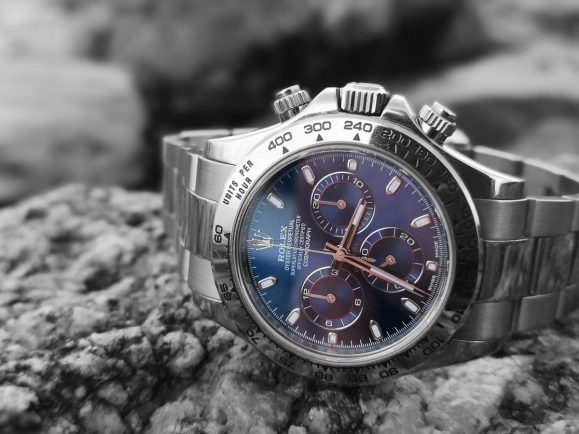
The dive watch history starts not in boutiques but in military contracts and professional expeditions. In the mid-20th century, naval divers and commercial operators needed watches that could withstand pressure, resist water, and be read in near darkness. Rolex’s Submariner (1953) and Blancpain’s Fifty Fathoms (also 1953) defined the template: high water resistance, a clear dial, and a timing bezel to monitor oxygen. What began as rugged kit evolved into one of the most recognisable silhouettes in horology.
From Tool to Icon: How the Dive Watch Became Everyday Luxury
The dive watch’s story begins far from boutique shop windows or glossy magazine spreads. Its origins lie in the gritty world of mid-20th-century naval contracts and commercial exploration. At that time, underwater operations were still experimental, and divers—both military and civilian—needed reliable equipment that could survive crushing pressure, saltwater corrosion, and near-total darkness. The wristwatch, already an established tool for soldiers and aviators, became a vital lifeline beneath the waves.
Two releases in 1953 defined the genre and still cast a long shadow today: Rolex’s Submariner and Blancpain’s Fifty Fathoms. Both models solved the same problem in slightly different ways, offering water resistance, luminous hands and markers, and a rotating bezel to track oxygen supply. Their designs became the template for every dive watch since. These rugged, functional instruments soon developed a cult following outside the professional sphere, as recreational diving took off in the 1960s and 70s. By then, the “dive watch” was no longer just a piece of kit—it was a cultural symbol of adventure, reliability, and understated masculinity.
Core Features: The Anatomy of a Dive Watch
The International Organization for Standardization eventually codified what it meant to be a “true” dive watch under ISO 6425. To carry that designation, a watch must pass tests for water resistance (minimum 100 metres), legibility in total darkness, shock resistance, and protection against magnetic fields. Even though many luxury houses don’t formally certify every model, the DNA remains instantly recognisable.
- Water resistance: Entry-level models typically rate to 100 metres, enough for swimming or snorkelling, while professional-grade divers push past 300 metres. Some extreme pieces boast 1,000 metres or more, though almost no human will ever test those limits.
- Rotating bezel: By ISO rules, it must be unidirectional, so accidental knocks can only shorten dive time, never extend it. This bezel can be aluminium (traditional and affordable), stainless steel (tougher), or modern ceramic (virtually scratch-proof and colourfast).
- Lume: Applied generously on indices and hands, lume ensures the dial glows clearly in low light. Different compounds have been used over the decades, from early radium and tritium to today’s safe and long-lasting Super-LumiNova.
Even if most modern owners never dive deeper than the shallow end of a pool, these features remain central to the dive watch’s identity. They lend legitimacy, authenticity, and that crucial aura of rugged reliability.
Case and Bracelet Ergonomics: Desk-Diving vs Real Diving
The truth is that the modern wristwatch spends more time under a shirt cuff than strapped over a wetsuit. This reality has shifted the focus from sheer toughness to comfort and refinement. Early divers were hefty 40–42mm steel blocks, designed for legibility and pressure resistance rather than elegance.
Today, brands pay close attention to ergonomics. Slimmer cases, bevelled lugs, and lighter titanium alternatives make dive watches easier to wear all day. Bracelet design has also evolved: once clunky, they now feature micro-adjustment clasps that can expand on the fly, useful both for wetsuits and for hot summer days when wrists swell. Purist tool watches still exist for saturation divers or professionals working offshore, but most buyers prioritise versatility—the ability to wear the same watch in the office, at the gym, and on holiday.
Modern Materials: Ceramic, Sapphire, and Beyond
The transformation of the dive watch from rugged tool to luxury icon has been accelerated by materials science. Where once bezels were made from aluminium, prone to scratches and fading, today’s ceramics are virtually indestructible and retain their glossy finish indefinitely.
Similarly, crystals have evolved. Early divers used acrylic or mineral glass, which scratched easily but could be polished. Modern sapphire crystal is far tougher, keeping watches pristine through daily wear. Titanium alloys now reduce weight and resist saltwater corrosion better than steel, while exotic touches like carbon fibre cases or Liquidmetal bezels push the boundaries of design. These shifts reframe the dive watch as an object built not just to survive, but to endure beautifully—an heirloom rather than a disposable tool.
Everyday Styling: Versatility is the New Luxury
One of the reasons the dive watch escaped its strictly utilitarian past is its extraordinary styling versatility. A simple black-dial diver in steel looks as natural with jeans and trainers as it does peeking from under a tailored suit cuff. Swap the bracelet for a NATO or rubber strap, and you’ve got a weekend-ready companion. Keep the brushed steel bracelet on, and it passes as a discreet piece of jewellery.
This flexibility explains why the dive watch remains one of the most popular categories in modern watchmaking. Unlike dress watches, which can feel too formal, or digital sports watches, which can look too casual, the dive watch straddles both worlds. It suggests adventure while still signalling refinement—a rare combination.
Depth Ratings and Service Schedules: Choosing Wisely
Depth rating often dominates marketing, but practical buyers should consider their own use case:
- 100m water resistance: Enough for swimming, snorkelling, and most surface-level activities.
- 200–300m: Covers recreational diving with plenty of margin.
- 500m+: Specialist territory, impressive on paper but unnecessary for almost everyone.
What matters more than headline depth ratings is maintenance. The rubber gaskets and seals that keep water out degrade over time, so a diver’s watch should be pressure-tested every 3–5 years, particularly if it sees regular water exposure. Crowns and pushers should always feel secure; any resistance or looseness is a warning sign. Movement servicing depends on calibre but usually falls within the 5–10 year window for mechanical watches.
Final Thought
The dive watch’s rise from tool to icon shows how practical engineering can become cultural luxury. Today, buyers can choose between heritage-driven reissues, cutting-edge ceramic-clad marvels, or entry-level models that deliver the look without breaking budgets. Whether you’re researching a first purchase or hoping to win a watch in a collector’s giveaway, the same truth holds: the dive watch earns its place because it remains useful, versatile, and timeless.