

A MERIDEN woman living with an aggressive brain tumour has praised scientists on their breakthrough.
Researchers say the have found a way to limit the growth of the most commonly diagnosed high-grade brain tumour in adults.
For patients like Hannah King-Page it could mean a new way to slow and target tumours.
Researchers at the Brain Tumour Research Centre of Excellence at Queen Mary University of London have revealed that a gene known as METTL7B is essential in regulating the growth of glioblastoma (GBM) tumours.
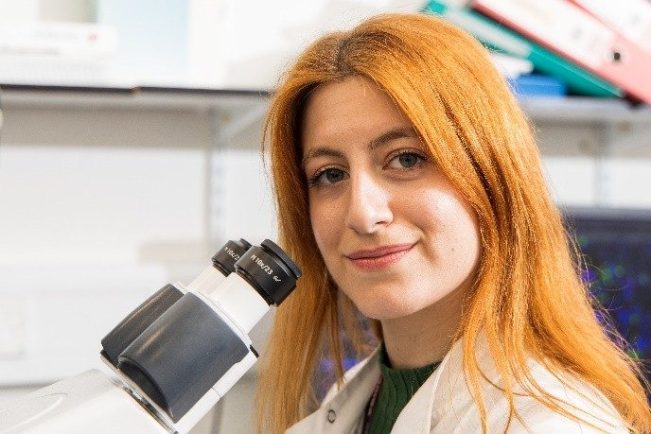
Dr Myrianni Constantinou, a Brain Tumour Research funded scientist, found that the gene is overactive in GBM tumours but when the gene was silenced, the resultant tumours were significantly smaller. The tumours cells however travelled more into the surrounding areas of the brain making the tumour more invasive.
Professor Marino said: “This new research is significant because it has increased our understanding of how glioblastoma tumours grow and behave and could provide researchers with a new way of treating these tumours.
“It has opened the way for research into a new potential combination therapy, using two types of drug; one to slow tumour growth and one to target invasiveness, which may result in smaller, less aggressive tumours.”
Hannah was diagnosed with a GBM in November 2020 after suffering a seizure at work. She had surgery, followed by radiotherapy and chemotherapy.
Her diagnosis forced her to give up her dream job as a specialist musculoskeletal (MSK) and pain management physiotherapist. At the beginning of the year, Hannah finished 39 rounds of chemotherapy and has MRI scans every three months.
The 42-year-old said: “This is a massive step towards changing how glioblastomas are treated, which hasn’t changed for more than 20 years. It’s great to think that one day there will be a wider range of treatments for GBM in the UK with personalisation rather than ‘the one size fits all’ approach at present.
“Having had the opportunity to visit in the laboratory at Queen Mary University on a guided tour with Brain Tumour Research and meet some of the neuroscientists that work there, it was an incredible insight into the big science behind the research – and a big reason why I support the charity and it’s vital work for brain tumour patients.”
Each year in the UK, 3,200 people are diagnosed with a GBM, which has an average survival time of just 12 to 18 months.
Despite this, treatments for GBM have not changed in two decades and there is no cure.
The study – published in the journal Cell Reports – was led by Professor Silvia Marino, Professor of Neuropathology at Queen Mary University of London.