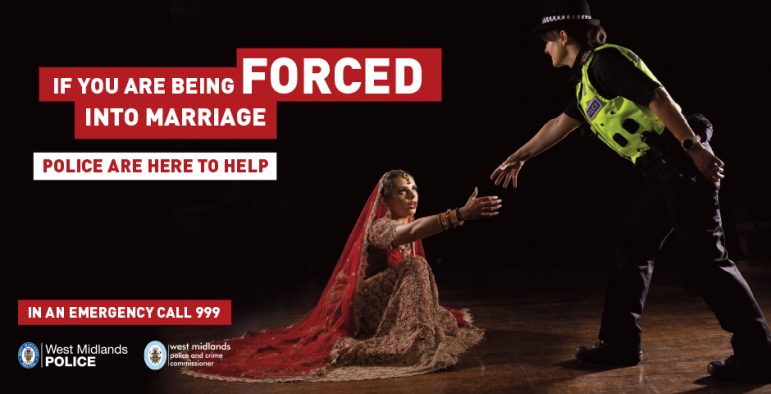
HELP IS at hand for anyone being forced into marriage this summer – that’s the message from West Midlands Police.
To mark National Day of Remembrance for Victims of Honour-Based Abuse and Forced Marriage the force has highlighted the signs to look out for and called on residents to report anything suspicious.
West Midlands Police said: “This is also the time of year when schools and colleges will start to break up for the summer holidays.
“It’s important to remember that for some children and young people, now is the time that they will be at increased risk of forced marriage or female genital mutilation (FGM).”
A forced marriage is where one or both people do not (or in cases of people with learning disabilities, cannot) consent to the marriage and pressure, abuse, threats, violence, coercion and/or deception is used. It’s a form of honour-based abuse and it’s a criminal offence.
FGM is when the female genitals are deliberately cut, altered or removed for non-medical reasons.
The consequences of FGM are severe and can have lifelong physical, psychological and social implications. It’s important to remember that FGM is not part of any religion – it’s child abuse and it’s illegal.
The police said identifying cases of FGM or forced marriage can be challenging due to the secretive nature of the practices, but there are signs that may indicate a young person is at risk or has already been a victim of these crimes:
Signs of forced marriage could include running away from home, a surprise engagement to a stranger, not returning from a visit to another country and self-harming or attempted suicide.
Signs FGM might happen could include a relative or someone known as a ‘cutter’ visiting from abroad, discussions about an upcoming ceremony or special occasion where a girl ‘becomes a woman’ and a female relative like a mother, aunt or sister has undergone FGM.
Signs FGM might have taken place could include health issues – complaints about difficulty walking, sitting or frequent urinary or menstrual problems, reluctance to go to the doctors or have routine medical examinations and acting differently after an absence from school or college.
If someone is at risk of or has undergone female genital mutilation or a forced marriage, contact police on 101 via the live chat on the force’s website.
Alternatively, contact Crimestoppers anonymously on 0800 555 111.
If anyone is in immediare danger call 999.
For forced marriage in particular, there is the 24/7 West Midlands Forced Marriage and Honour-Based Abuse Helpline on 0800 953 9777.