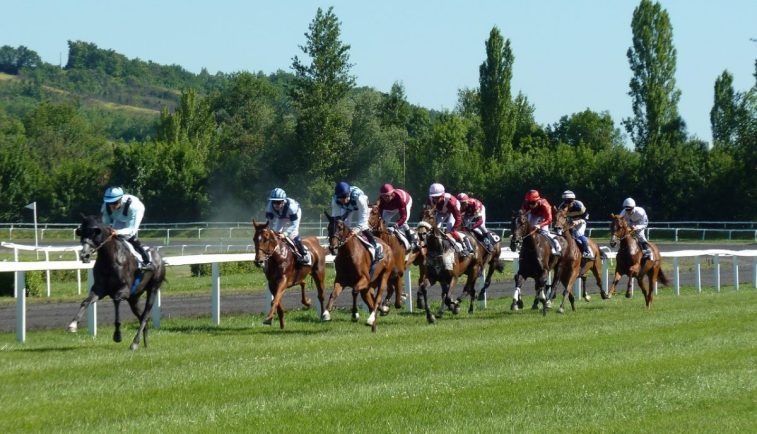
Horse racing has its flagship events, the one racing fans pin their calendars around. Royal Ascot brings the glamour, Epsom the heritage, Cheltenham the drama of the Gold Cup.
Newmarket might be a well-known name, but it lacks the prestige of some of racing’s greatest weeks.
But the Newmarket July festival is one of racing’s most exciting events across Britain and Ireland. It’s three days of Group 1 flat racing with a more relaxed dress code than many prestigious, and a more relaxed atmosphere, but with excitement that rivals all the biggest races of the flat season.
Here’s your guide to Newmarket, and what you need to know before you start placing any bets. You can also use a William Hill promo code to bet on the big races, but first you need to understand the Newmarket track.
Newmarket: the home of British flat racing
Newmarket is not simply a racecourse. It is a town that exists to serve the sport, home to roughly 3,000 horses in training, the National Stud, and Tattersalls, the most significant bloodstock auction house in Britain. The Jockey Club was founded here, making it the place where the rules of British racing were effectively written.
There are two distinct courses. The Rowley Mile operates in spring and autumn, hosting the Classics in May. It is a wide, galloping track with the famous Dip in the final furlong, demanding and unforgiving, the kind of finish that can seriously expose horses who don’t have enough in the tank.
Set on the open Heath with an undulating straight and a sharp rise in the closing furlong, the July Course has a looser, more informal feel. Locals walk the perimeter. Morning gallops on the Heath are open to watch. No other venue in British racing puts the reality of the sport so visibly in front of you.
The July Festival Races previewed
The July Festival runs Thursday to Saturday, each day anchored by a headline race.
Thursday’s feature is the Princess of Wales’s Stakes, a Group 2 over a mile and four furlongs. Many trainers use it as a prep for the King George at Ascot later in July. Horses clearly aimed at a bigger target can be opposed.
Friday’s spotlight falls on the Tattersalls Falmouth Stakes, a Group 1 mile race for fillies and mares. Three-year-olds take on older horses, Ascot form carries across cleanly. Runners from the Coronation Stakes are a consistent source of winners and the logical place to start when building a shortlist.
Saturday belongs to the July Cup, where the European sprint picture gets properly defined. Run over six furlongs since 1876, it has held Group 1 status since 1978 and produced a long line of European champion sprinters.
The trends are worth knowing before you bet: 11 of the last 12 winners were aged three or four, nine of the 12 had previous course experience, and four ran in the Commonwealth Cup at Royal Ascot on their previous start. The 2025 renewal was won at 66-1 by No Half Measures, a timely reminder that the July Cup bites.
The July Course is one of the more accessible venues on the circuit. The dress code is relaxed, with no formal requirements. Coming directly after Royal Ascot, it picks up the momentum of the summer’s biggest meeting without any of the formality. For a punter after clear form and well-defined race patterns, it is one of the most straightforward festivals on the calendar.