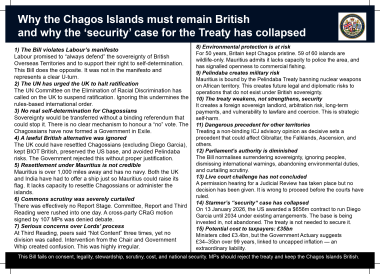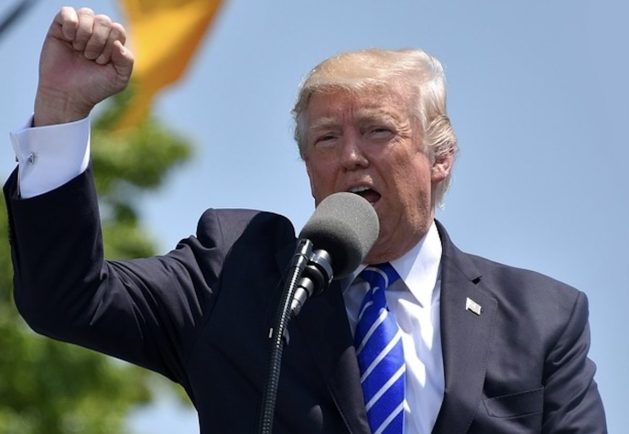
US President Donald Trump has publicly warned Prime Minister Keir Starmer not to proceed with a proposed long-term lease over Diego Garcia, intensifying political pressure on the Labour Government’s controversial Chagos Islands agreement.
In a post on Truth Social, Mr Trump said he had been advising the Prime Minister against entering into a 100-year lease arrangement linked to the transfer of sovereignty over the Chagos Archipelago to Mauritius.
“I have been telling Prime Minister Keir Starmer, of the United Kingdom, that Leases are no good when it comes to Countries, and that he is making a big mistake by entering a 100 Year Lease with whoever it is that is ‘claiming’ Right, Title, and Interest to Diego Garcia, strategically located in the Indian Ocean,” he wrote.
Diego Garcia forms part of the British Indian Ocean Territory and hosts a joint UK-US military base that has supported American and British operations in the Middle East and Indo-Pacific for decades, including long-range bomber missions. Its location places it within operational range of the Gulf and parts of East Africa and Asia, making it one of Washington’s most significant overseas facilities.
Under Labour’s proposed agreement, Britain would transfer sovereignty of the wider archipelago to Mauritius and lease back Diego Garcia for defence purposes for 99 years, at a reported cost of £35bn over the lifetime of the arrangement. Ministers have argued the deal secures the long-term future of the base while resolving a protracted sovereignty dispute that has generated adverse advisory rulings in international courts and at the United Nations.
Mr Trump’s intervention directly challenges that strategy and questions the basis of the Mauritian claim. He wrote: “Our relationship with the United Kingdom is a strong and powerful one, and it has been for many years, but Prime Minister Starmer is losing control of this important Island by claims of entities never known of before. In our opinion, they are fictitious in nature.”
The president also framed the issue in stark security terms, linking Diego Garcia to the prospect of military action against Iran.
“Should Iran decide not to make a Deal, it may be necessary for the United States to use Diego Garcia, and the Airfield located in Fairford, in order to eradicate a potential attack by a highly unstable and dangerous Regime – An attack that would potentially be made on the United Kingdom, as well as other friendly Countries,” he wrote.
RAF Fairford in Gloucestershire is routinely used by US strategic aircraft and has previously hosted B-2 and B-52 bomber deployments.
Mr Trump concluded with a direct appeal:
“Prime Minister Starmer should not lose control, for any reason, of Diego Garcia, by entering a tenuous, at best, 100 Year Lease. This land should not be taken away from the U.K. and, if it is allowed to be, it will be a blight on our Great Ally. We will always be ready, willing, and able to fight for the U.K., but they have to remain strong in the face of Wokeism, and other problems put before them. DO NOT GIVE AWAY DIEGO GARCIA!”
The president’s remarks add to mounting criticism of the Government’s handling of the issue. Opposition figures have questioned both the financial cost and the strategic implications of relinquishing sovereignty over territory that has been under British control since 1814. Critics argue that leasing back a base regarded as indispensable to Western defence weakens Britain’s negotiating position and creates potential long-term vulnerabilities.
The intervention also comes amid renewed tensions on the islands themselves. A group of Chagossians recently returned to parts of the archipelago, declaring their intention to establish a permanent presence more than 50 years after the original population was removed to make way for the US base. The British Indian Ocean Territory administration has since issued removal notices under the 2004 Immigration Order, warning of possible criminal penalties for unlawful residence.
Legal proceedings connected to the sovereignty dispute are ongoing in the UK courts, following a judicial review hearing in October. A judgment is still awaited.
Ministers maintain that the agreement with Mauritius is necessary to secure legal certainty and safeguard the continued operation of the base in the face of sustained international pressure. However, Mr Trump’s public rebuke introduces a significant transatlantic complication.
By framing the issue as both a strategic miscalculation and a surrender of control, the US president has placed additional scrutiny on Sir Keir’s approach at a moment when the Government is seeking to reassure allies that Britain remains a dependable security partner.
Readers can donate to the Crowdfunded for the Chagossians here.
READ PRESIDENT TRUMP’S POST IN FULL:
“I have been telling Prime Minister Keir Starmer, of the United Kingdom, that Leases are no good when it comes to Countries, and that he is making a big mistake by entering a 100 Year Lease with whoever it is that is ‘claiming’ Right, Title, and Interest to Diego Garcia, strategically located in the Indian Ocean.” Diego Garcia forms part of the British Indian Ocean Territory and hosts a joint UK US military base that has played a central role in American operations in the Middle East and Indo Pacific for decades. The UK government has been advancing legislation linked to an agreement with Mauritius concerning sovereignty over the Chagos Islands, under which Britain would lease back Diego Garcia for defence purposes. Ministers have argued that the arrangement secures the long term future of the base while resolving a long running sovereignty dispute. Trump’s post directly challenges that approach. He wrote, “Our relationship with the United Kingdom is a strong and powerful one, and it has been for many years, but Prime Minister Starmer is losing control of this important Island by claims of entities never known of before. In our opinion, they are fictitious in nature.” He added that the base could be critical in the event of heightened tensions with Iran. “Should Iran decide not to make a Deal, it may be necessary for the United States to use Diego Garcia, and the Airfield located in Fairford, in order to eradicate a potential attack by a highly unstable and dangerous Regime – An attack that would potentially be made on the United Kingdom, as well as other friendly Countries.” RAF Fairford in Gloucestershire is regularly used by US strategic aircraft and has previously supported American bomber deployments. Trump concluded with a direct appeal to Starmer. “Prime Minister Starmer should not lose control, for any reason, of Diego Garcia, by entering a tenuous, at best, 100 Year Lease. This land should not be taken away from the U.K. and, if it is allowed to be, it will be a blight on our Great Ally. We will always be ready, willing, and able to fight for the U.K., but they have to remain strong in the face of Wokeism, and other problems put before them. DO NOT GIVE AWAY DIEGO GARCIA!”
OPINION: Chagos For Dummies: How The UK Plans To Give Away Sovereignty And Pay To Rent It Back
Imagine this. Your best friend owns a house in a pretty dangerous neighbourhood.
Inside that house is a single room stuffed with ultra sensitive security equipment, radar arrays, communications systems, surveillance gear that lets you keep a beady eye on your principal rival across the street.
You and your best friend built it together. You paid a lot of money for it.
It is one of the most important rooms you possess anywhere on Earth.
For decades, you helped control the property.
Then one morning your best friend clears his throat and says: “We are giving the house to someone else, but do not worry, we will rent back the room you are using.”
You blink.
You and your best friend used to own and control the house.
Now you are tenants.
And not cheap ones either. You and your best friend will still pay for maintenance, upgrades, security, insurance, utilities, for everything, just without owning the building.
Then you discover something else.
The proposed new landlord has already signed agreements with the neighbours about what kinds of weapons or equipment can be kept on this street.
He smiles reassuringly.
“Do not worry, that will not affect your room.”
But when you read the fine print your stomach tightens.
Those rules could change.
Future landlords could reinterpret them.
Other neighbours could start objecting.
Pressure campaigns could grow.
Suddenly your most sensitive room depends on somebody else’s politics.
And it gets worse.
The house sits in the middle of a vast garden full of rare wildlife and fragile ecosystems so pristine that for half a century hardly another human being has been allowed to step inside. You and your best friend spent a fortune protecting it.
The proposed new landlord lives hundreds of miles away.
He does not have much money to patrol the grounds. He doesn’t even have the transport to get there without hitching a lift.
He is already talking to people who want access to the property and it’s grounds: hunters, developers, tour operators.
You begin to wonder who exactly will stop that garden from being carved up once you no longer hold the gate keys.
And then the truly chilling thought occurs.
Your main rival, who happens to be rather friendly with the new proposed landlord, would dearly love to see you pushed out.
They do not even need to take the house.
They just need friction.
Uncertainty.
Legal challenges demanding that you dismantle your equipment.
Neighbours knocking at the door with clipboards and court orders.
You are still paying.
You are still relying on that room.
But you no longer own the building.
You do not hold the keys.
What This Has To Do With The Chagos Islands
This is precisely what is now being attempted in the Indian Ocean.
Under Keir Starmer’s plan, Britain would transfer sovereignty of the sixty islands that make up the Chagos Archipelago to Mauritius.
The UK would then lease back the biggest island (Diego Garcia), home to the most important US and British military facility in the region.
No wonder the United States is worried.
Labour ministers insist their deal secures the base for the long term and finally puts decades of colonial legal disputes to rest.
They are wrong.
The Chagos Islands are home to Diego Garcia, a UK / U.S. military base of significant strategic importance, particularly for operations in the Middle East, South Asia, and Africa. Scene Camera Operator: PH2 Frazier. Copyright: Public Domain.
First, The Cost
They warn that British taxpayers will be saddled with tens of billions of pounds over the life of the lease and associated compensation packages, figures circulating in Whitehall approach thirty five billion pounds.
In other words, Britain gives away the deed and then pays extortionate rent to stay in one room.
Second, The Strategic Risk
Diego Garcia is not just another base.
It is the lynchpin of Western power projection across the Indian Ocean.
It hosts long range bomber deployments, intelligence collection hubs, missile defence infrastructure and, crucially, facilities capable of servicing nuclear powered submarines.
On that side of the globe there is no comparable alternative.
Critics argue that Beijing would welcome anything that complicates US and UK freedom of action, even without gaining control itself. In geopolitics, friction is a weapon. Regulation is leverage. Legal ambiguity is gold dust.
You do not have to seize the house if you can slow the people inside.
Third, Nuclear And Security Constraints
Mauritius is party to regional nuclear free zone treaties.
Supporters of the deal wave this away, insisting such commitments will never interfere with operations.
Sceptics are unconvinced.
Treaties evolve.
Courts reinterpret.
Campaigners litigate.
Future governments change their minds.
What is waved through today can be challenged tomorrow, and when the world’s most sensitive military hardware is involved, even the hint of doubt becomes destabilising.
Fourth, The Environment
The Chagos islands contain some of the most pristine marine ecosystems on the planet.
Britain spent decades policing fishing and preventing exploitation.
Critics ask whether a small, distant state facing economic pressure will be able, or willing, to enforce the same protections once sovereignty changes hands, especially when commercial interests come calling.
Once the door opens, it rarely closes again.
Fifth, The Islanders
Then there are the people who once lived there.
The Chagossians were forcibly removed decades ago and still lack a permanent right of return.
Opponents of the deal argue that handing sovereignty to another government without consulting those communities simply repeats the original injustice in a new bureaucratic form, decisions taken far away by people who do not live with the consequences. The Chagossians have since set up a Government in Exile. They overwhelmingly want their islands to remain British and they want to protect the military base.
If Britain is to give the islands to anyone, they say, surely the voices of those expelled should come first.
Keir Starmer insists the deal brings stability. Critics say that argument has already crumbled.
They describe it like this.
You handed over the deed.
You kept one room.
You agreed to pay rent for the next century.
And you told yourself every future landlord will behave impeccably forever.
In geopolitics, that is not realism.
It is wishful thinking elevated to statecraft.
Labour is asking the country to accept an irreversible transfer of sovereignty, staggering long-term costs, new strategic uncertainty and permanent dependence on the goodwill of others, all in exchange for promises that cannot be enforced once the keys are gone.
Great powers do not protect their most sensitive military assets this way.
Serious governments do not mortgage strategic crown jewels for legal convenience.
And nations that care about deterrence, security and their allies do not gamble on arrangements that only work if everyone, forever, keeps their word.
This deal is not cautious.
It is not conservative.
It is not stabilising.
It is a leap into the dark, and Britain will not get a second chance to retrieve what it is preparing to give away.
This deal must be stopped before it is too late.
By Claire Bullivant